

The traditional publishing model isn’t just changing – it’s being rebuilt. For decades, media companies operated on the “flight” model: selling temporary ad inventory and running one-off campaigns.
But in early 2026, the industry has reached a breaking point. Local advertisers are overwhelmed, skeptical, and increasingly demanding. They don’t want impressions and reach. They want measurable business growth.
Our CMO, Rachel Nulman-Schapiro, sat down with industry veteran Todd Handy, CEO of Disruptive Impact, to discuss why publishers must stop selling media as inventory and start operating like Software-as-a-Service companies.
Here are five key takeaways for publishers, media companies, and agencies looking to build more sustainable growth models:
1. Stop selling inventory. Start selling systems.
Leading publishers are shifting from campaigns to outcomes. The change isn’t a new ad format — it’s a mindset shift.
“Those who are going to win will be those who stop selling media as inventory and start selling it as a growth system — one that you can measure.”
There are three core pillars publishers should focus on to unlock new, recurring revenue:
- Build repeatable go-to-market systems that move from one-off campaigns to monthly and annual recurring revenue (MRR/ARR).
- Prove value with measurable outcomes, not vanity metrics. Booked appointments, quotes, and revenue matter more than clicks.
- Leverage proprietary assets like first-party data, community trust, and local relationships that large platforms can’t replicate.
2. The SaaSification of media
Traditional media companies often experience 30–50% monthly churn. According to a recent vcita SMB survey, up to 68% of local businesses switch marketing providers due to a perceived lack of ROI.
If you’re replacing half your book of business every month just to stay flat, you don’t have a growth model; you have a leaking bucket. Software companies solved this years ago. They don’t just sell a product – they onboard, support, measure usage, and obsess over retention.
Here’s what that shift looks like in practice:
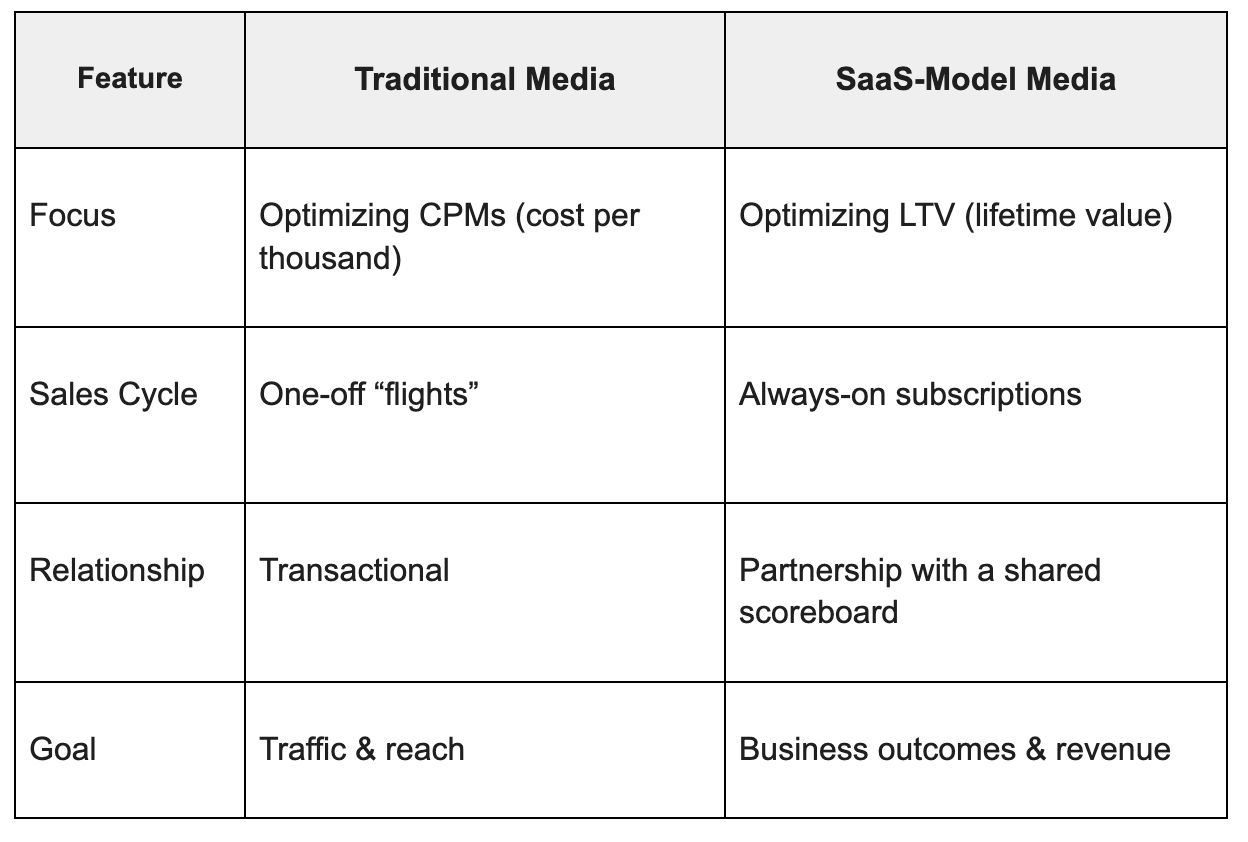
The winners won’t be those who sell the most impressions, but those who maximize lifetime value.
3. Closing the ROI gap
A major reason local businesses churn is not necessarily poor leads, but poor visibility into what happened after the lead came in.
“Most of the time, churn isn’t because leads are bad,” Todd explains. “It’s because the lead never became revenue and nobody could show what happened.”
The real issue is attribution. And so, to close the ROI gap, publishers must own the lead management layer, not just the traffic layer. That means tracking beyond the click: form fills, calls, booked appointments, and closed sales.
It also means helping advertisers improve speed-to-lead through automation and structured follow-up systems. By creating a shared scoreboard -using CRMs or revenue dashboards – publishers can clearly demonstrate revenue influenced by advertising spend. When revenue is visible, retention follows.
4. AI as an accelerator — not a differentiator
AI is no longer a “shiny new object.”, it’s a core infrastructure. But AI in itself is not a differentiator if it’s implementation does not measurably improve performance or overall outcome.
Publishers that fail to integrate AI into their operations risk losing efficiency, speed, and margin. They need to use AI to accelerate performance by:
- Reducing creative production time and enabling variant testing at scale.
- Automating transparent reporting and actionable insights.
- Proactively identifying at-risk accounts to prevent churn.
Within the publishing world we are also seeing a dual opportunity: using AI internally to operate smarter, and packaging AI-driven capabilities as part of the advertiser offering. But advertisers won’t choose a vendor simply because they use AI. They’ll choose the partner who can clearly tie AI to better business outcomes.
5. From funnel to flywheel: building sustainable growth
The traditional sales funnel ends at the transaction, where the SaaS-driven growth model doesn’t, but actually operates as a growth flywheel, moving the users from acquisition to expansion:
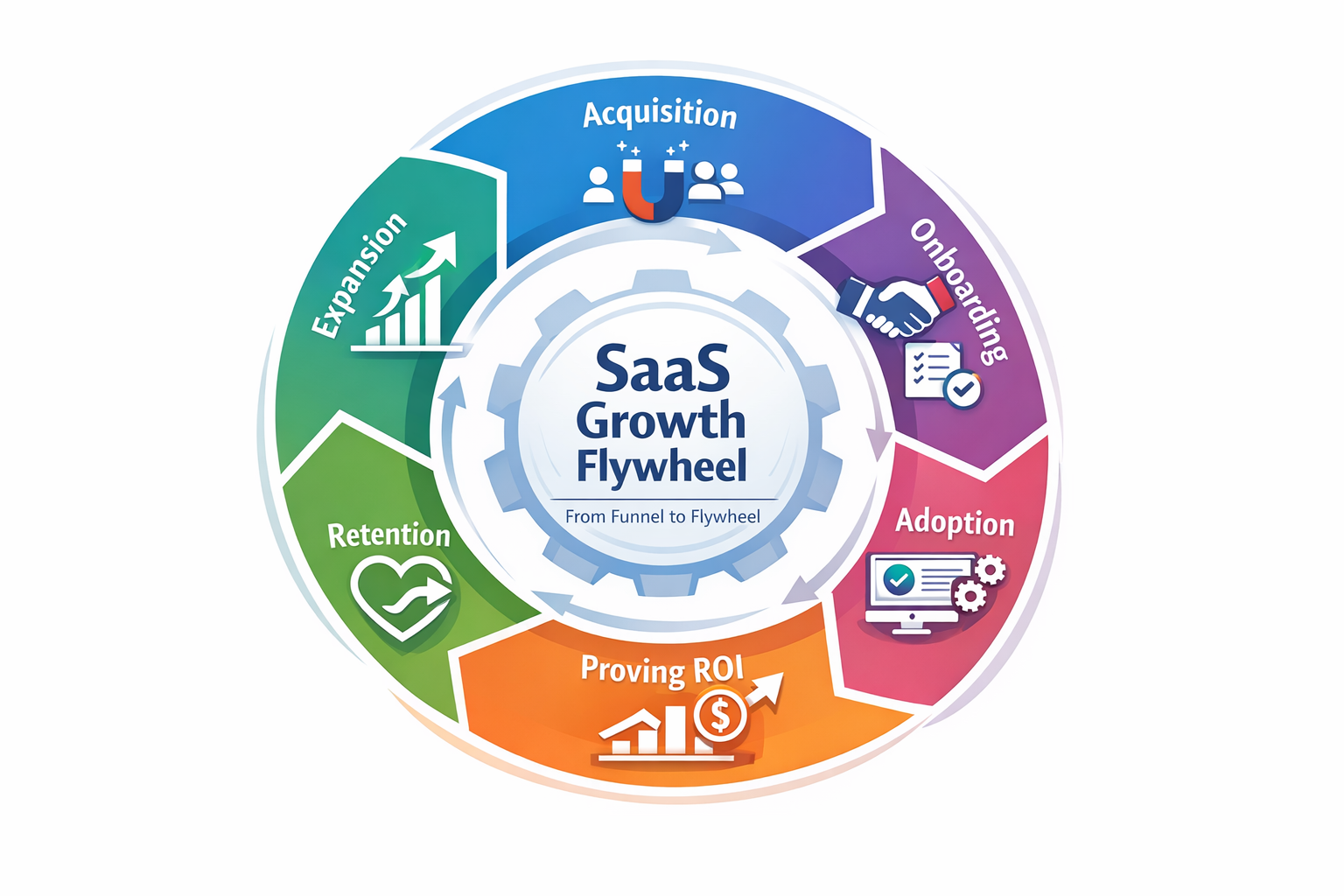
By integrating technology platforms like inTandem, publishers can deliver the all-in-one solutions that the majority of SMBs say they prefer — a single partner that combines marketing, lead management, and business tools.
“If your GRR is low, you don’t have a growth model. You have a hole in the bucket.”
When retention improves, growth compounds. The result is a self-reinforcing system rather than a constant race to replace lost campaigns.
The bottom line
Publishing is no longer just a media business; it’s a retention business and they need to start functioning as SaaS companies in their operational core.
The companies that win in 2026 will be those that shift from selling impressions to delivering measurable growth. Those that prioritize lifetime value over short-term campaigns. Those that prove ROI, leverage AI strategically, and build recurring revenue engines.
If you’re rethinking your revenue model and looking to move beyond campaign-based sales, learn how inTandem empowers partners to deliver measurable SMB outcomes and build sustainable recurring revenue. Schedule a call with one of our partnership experts.