

The “digital education” phase for small businesses is officially over. To succeed, service providers in 2026 must understand that today’s SMB owner is digitally mature and aggressively optimizing their workflow.
Our most recent survey data, tracking trends over the last three years, paints a clear picture for 2026. Almost all of the SMBs you serve use digital tools consistently to run their businesses. However, their tech stacks are shrinking. The percentage of small businesses using between two and four distinct tools dropped from 66% in 2023 to 59% in 2025.
The main question service providers must ask themselves this year is not whether their clients will adopt technology. It is whether their specific solutions will make the cut.
To future-proof your business and earn a place in your clients’ tech stacks, you need to be genuinely indispensable to them. That means shifting your focus away from vanity metrics, such as clicks, impressions, and activity, toward real, measurable business outcomes.
How service providers in 2026 can fuel SMB stability and growth
The phrase “nice to have” no longer applies to digital tools when it comes to running an efficient business, especially not for small businesses. 42% of SMB respondents now say they could not survive without their digital tools, revealing a deep operational dependency and reflecting just how critical technology has become to the way SMBs operate daily.
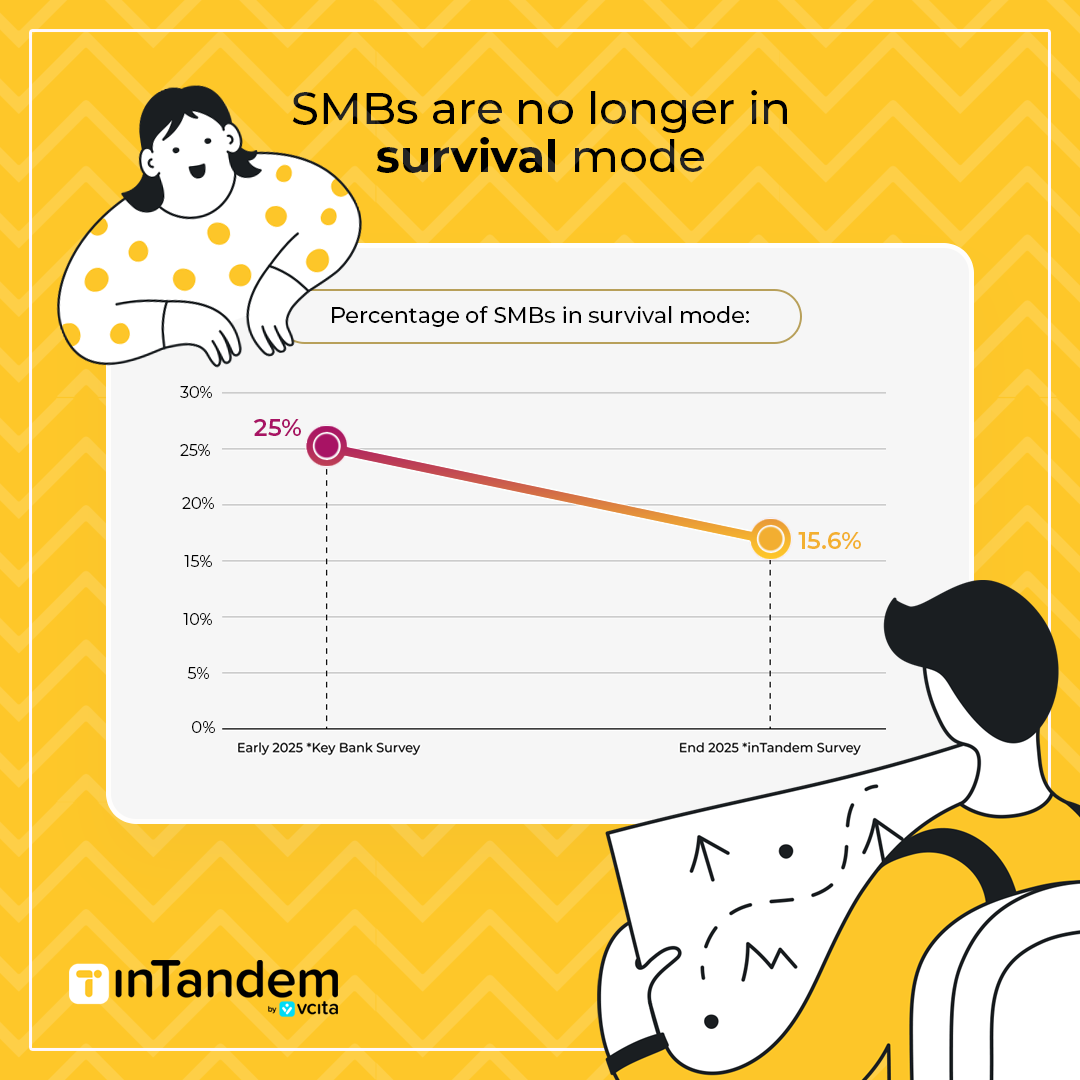
There’s also a more encouraging trend in the data. The number of small businesses in “survival mode” dropped significantly, from 25% in early 2025 to 15.6% later that same year. Digital tools are a meaningful part of that resilience, and the SMBs that are thriving are the ones that have figured out how to use technology to work smarter, not just harder.
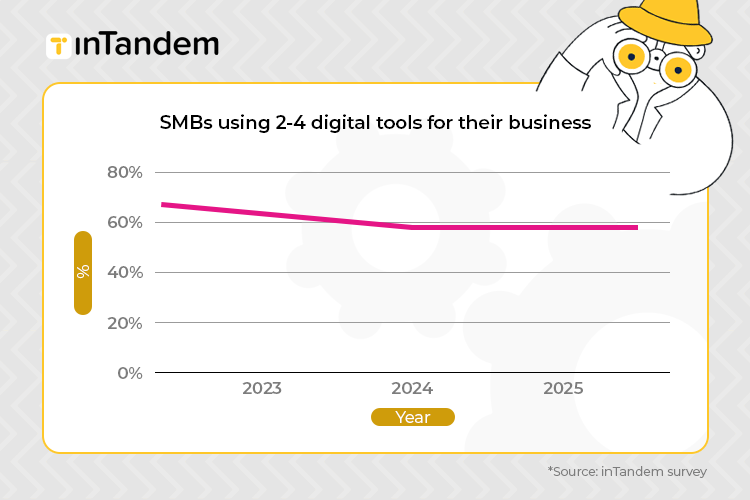
While this sounds like an immense opportunity for service providers, there’s a caveat. Although reliance on digital tools is growing, SMBs are also trimming the fat and using less tools that do more. The percentage of small businesses using 2–4 tools has dropped from 66% in 2023 to 59% in 2025. This isn’t an attempt to “do without” digital tools, it’s an attempt to declutter and reduce app fatigue.
Small businesses are tired of bouncing between tools that don’t talk to each other and don’t deliver on what actually moves their business forward. They’d rather gain bookings and revenue than clicks and calls. In fact, 43% of SMBs say they’d pay a premium for a solution that reduced their total number of tools, and 35% switched tools in the past year, with the top reason being a lack of needed features.
The features SMBs are demanding from their service providers
If your goal is to gain and retain more of the SMB market, you’ll need to know exactly what they’re prioritizing right now. The survey data points clearly to two areas that stand above the rest:
Invoicing, billing, and payment collection
Financial tools remain the most requested features among small businesses, and the reason is straightforward: 37% of SMB payments are late. Cash flow is one of the most persistent pain points in running a small business, and the service providers who step in to meaningfully solve it move from vendor to essential partner.
The good news for service providers is that SMBs are already primed for this. 87% already use automation for billing and payments, proving both the importance of payment tools and their ease of adoption. The infrastructure of trust is already there. What matters now is whether your offering actually delivers on the promise of getting them paid faster and more consistently.
Service providers have a real opportunity here to deepen their value by assisting and facilitating small businesses’ financial health, rather than just focusing on what keeps them operationally active.
Useful AI & automation that keeps SMBs in control
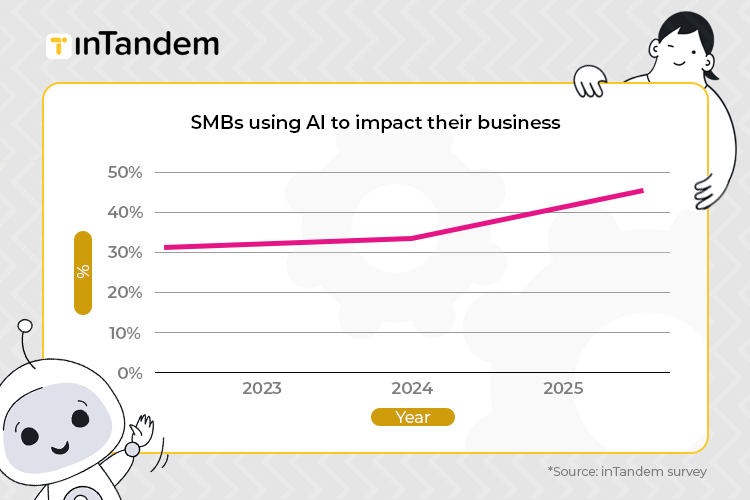
AI adoption among small businesses has seen a 36% increase between 2024 and 2025. Currently, 45% of SMBs use AI tools, and of those, 40% use them daily, indicating a meaningful behavioral shift that’s due to take over the market.
What do small businesses actually want AI to do for them? The top two responses were drafting customer communications (33%) and handling business administration (31%). In other words, they’re not looking for AI that gets prompted and then generates content. They want AI that handles the administrative weight that’s pulling them away from the actual work of running their business. It needs to function as a true business companion, not another task to manage.
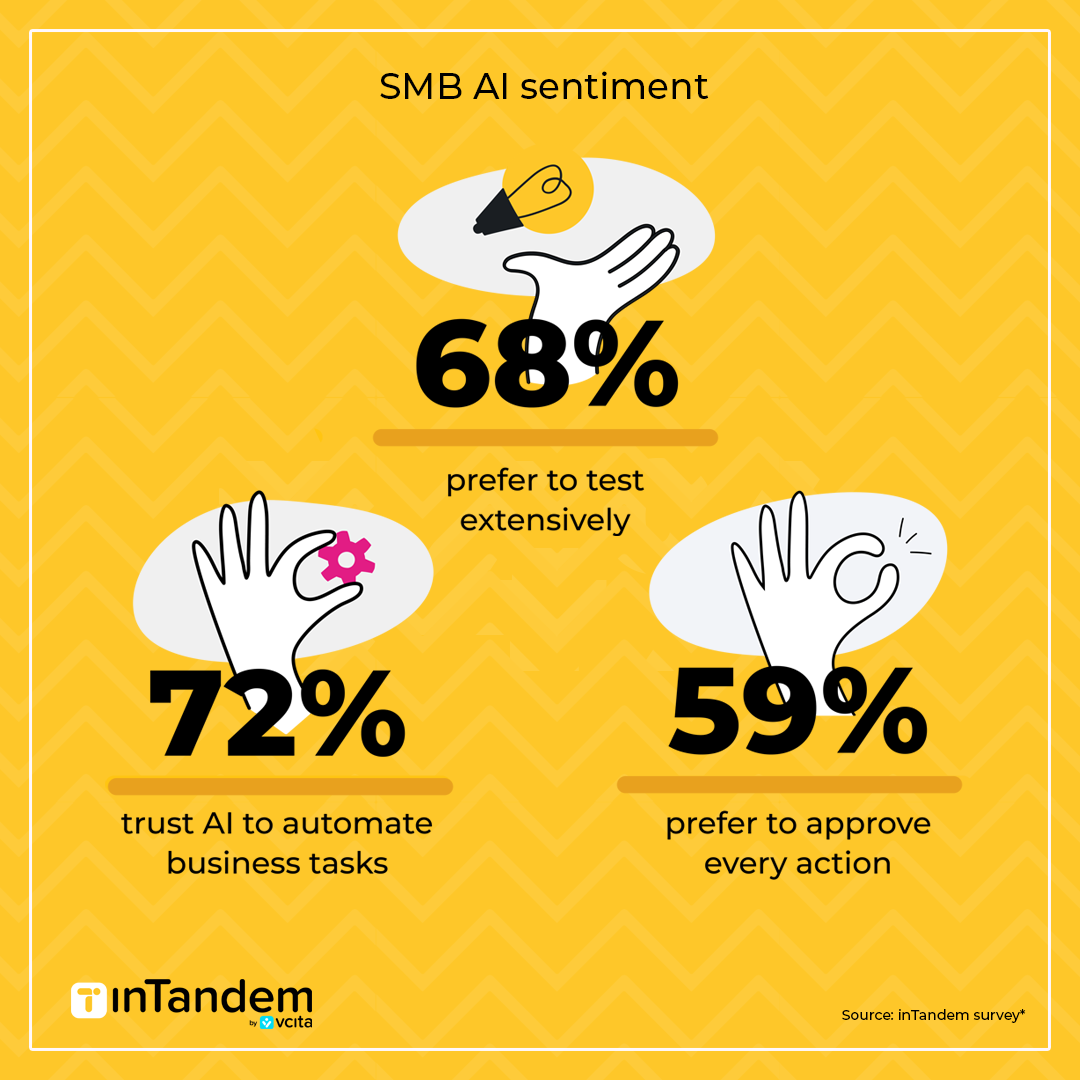
There’s an important nuance in the data here, though. While 72% of SMBs trust AI to automate business tasks, 68% still prefer to extensively test it before allowing it to act autonomously and 59% prefer to approve every action across the board. This hesitation isn’t about AI’s capability. Small businesses have worked hard to build trust with their clients, and they’re not willing to put that trust in the hands of a tool they haven’t fully vetted.
The AI and automation solutions that will win in this market won’t be the most ambitious ones, they’ll be the ones that keep the business owner in the driver’s seat, with the confidence to expand what they delegate over time.
Make sure your offering makes it with SMBs in 2026
The SMB market is consolidating around tools that deliver real results. Small businesses are reducing the number of solutions in their stack, making deliberate switches, and paying more for fewer tools that genuinely perform. They want help getting paid on time, streamlining their admin, and accessing AI and automation in a way that feels controlled rather than risky.
For service providers, this moment is both a challenge and a significant opportunity. The SMBs you serve are telling you exactly what they need. The providers who listen and expand their offerings accordingly will be the ones that become truly indispensable, reduce churn, and grow alongside the businesses they support.
That’s where having the right partner makes a real difference. Working with a company that has a proven track record in SMB tech means you don’t have to build these capabilities from scratch or spend years figuring out what works. You can expand your offering quickly and confidently, with solutions your SMB clients will actually use every day and keep coming back for.
Download the complete survey report to see all the data, year-over-year trends, and what they mean for your strategy in 2026.